
Sort By :
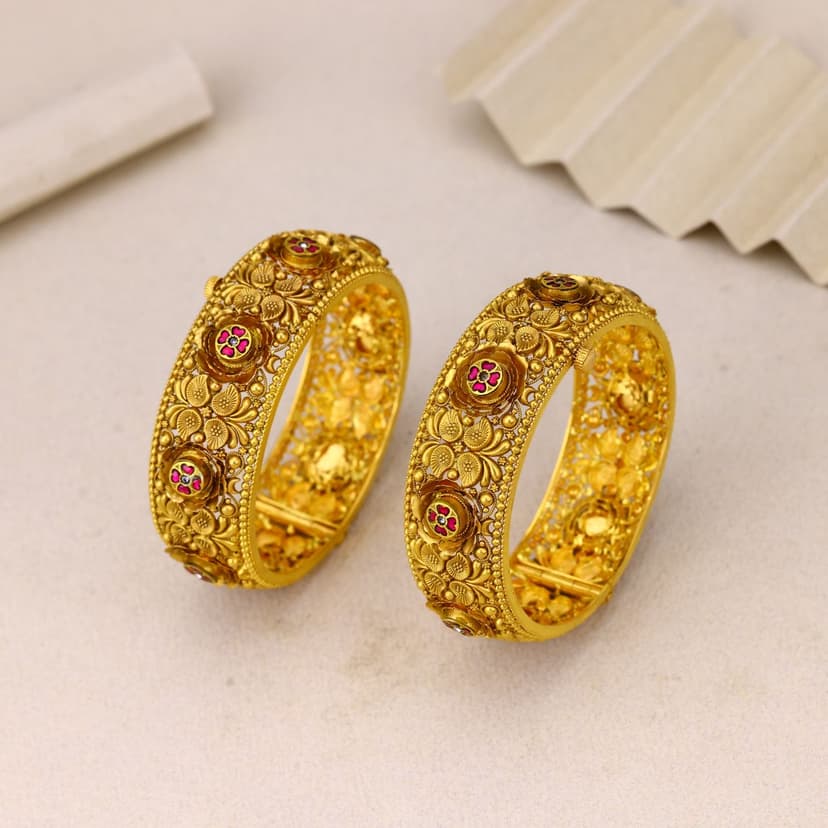
₹11,82,951
Sauramala Heritage Bangles 22KT
 70.560 gm
 22KT
22KT
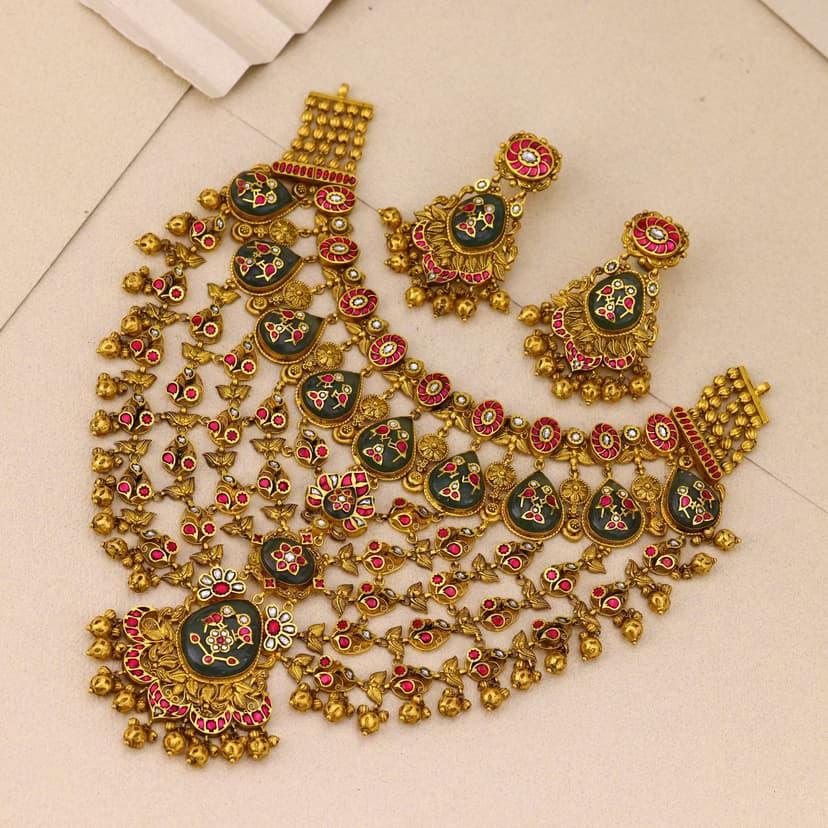
₹33,15,599
Rangamohita Heritage Necklace 22KT
188.900 gm
22KT
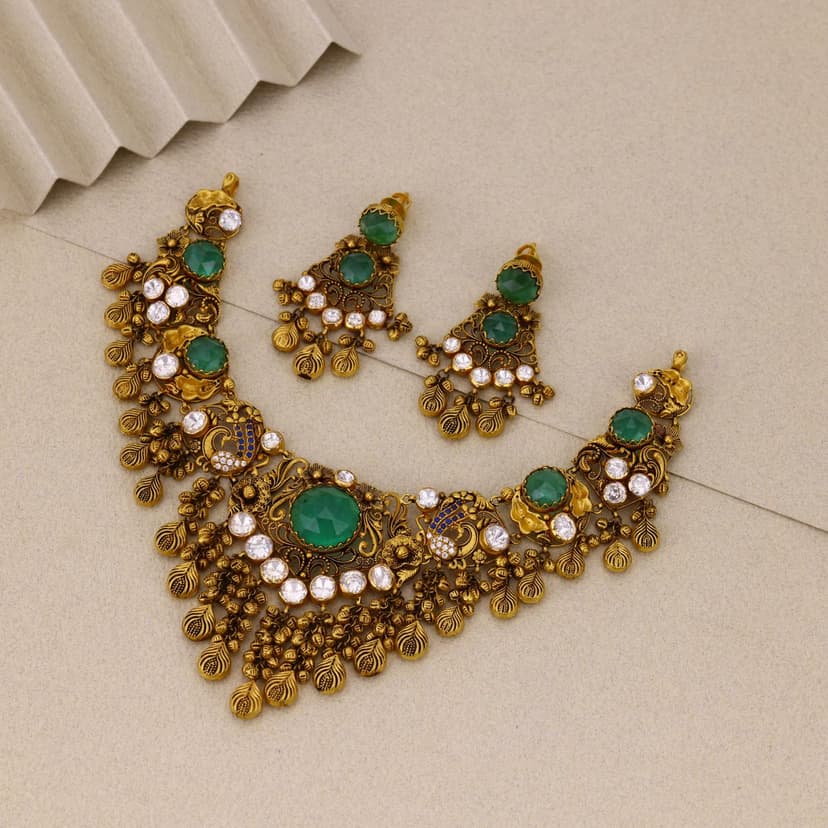
₹10,76,418
Mrinavari Heritage Necklace 22KT
63.290 gm
22KT
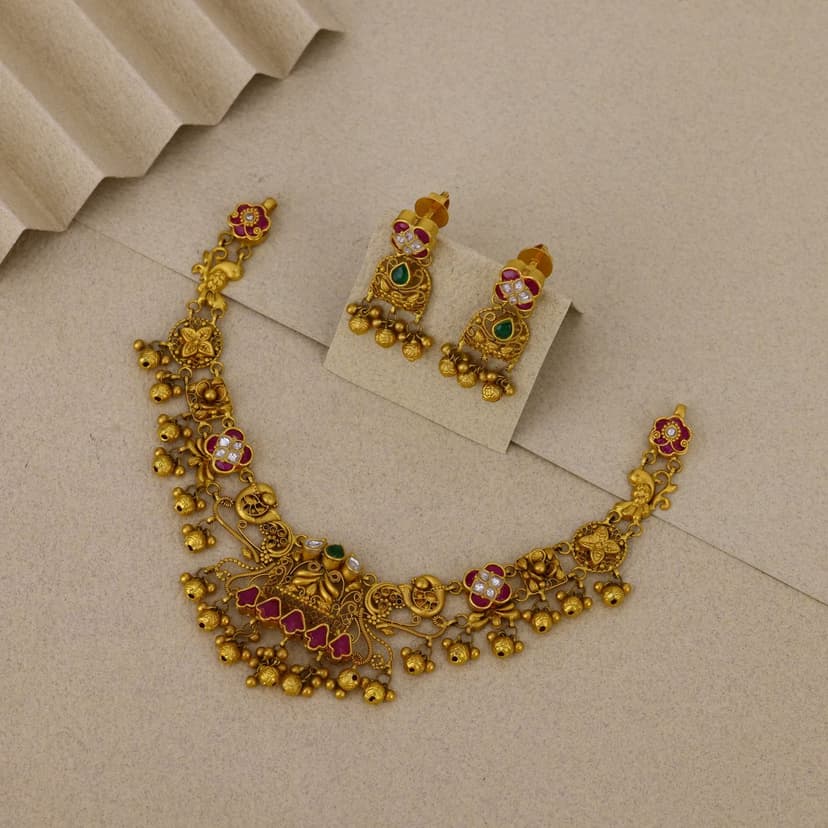
₹4,14,623
Kavyashri Heritage Necklace 22KT
24.000 gm
22KT
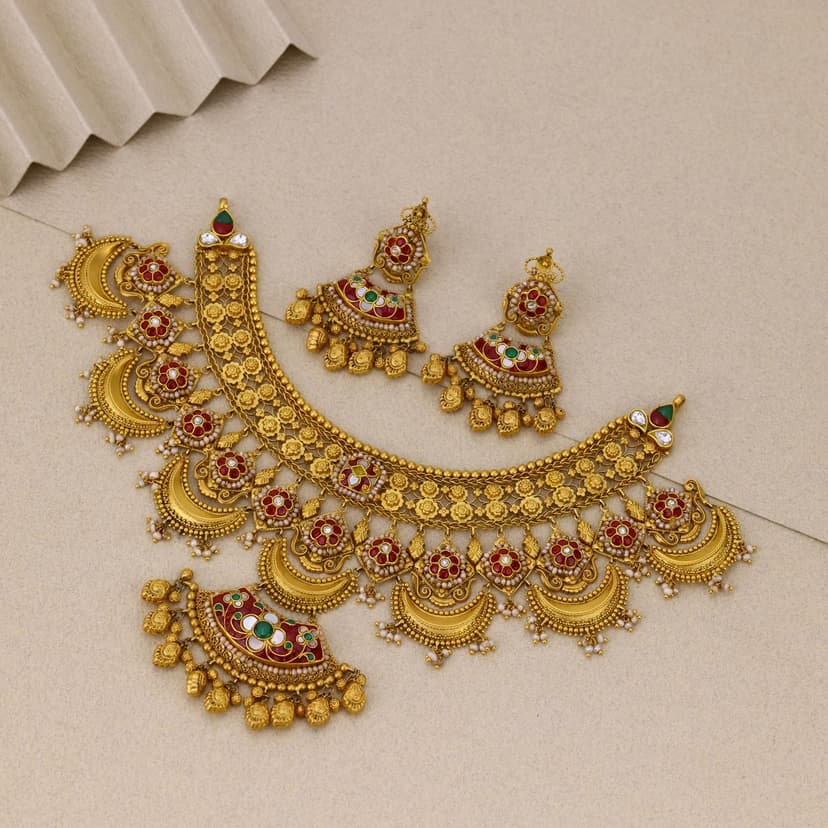
₹13,66,431
Mangalavira Heritage Necklace 22KT
77.730 gm
22KT
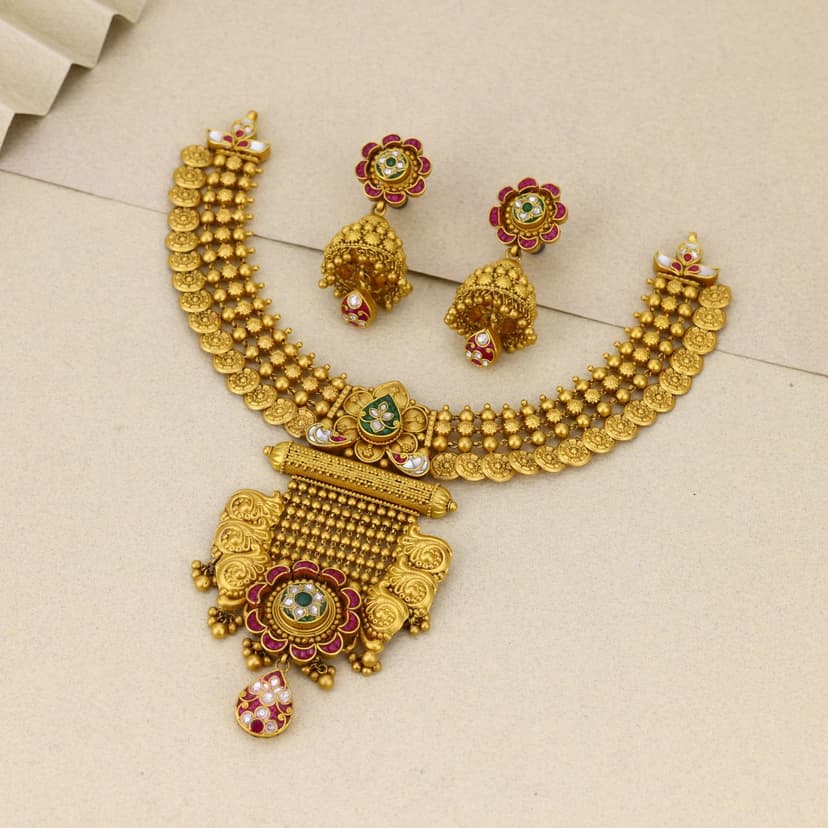
₹11,08,989
Rajamandari Heritage Necklace 22KT
62.770 gm
22KT
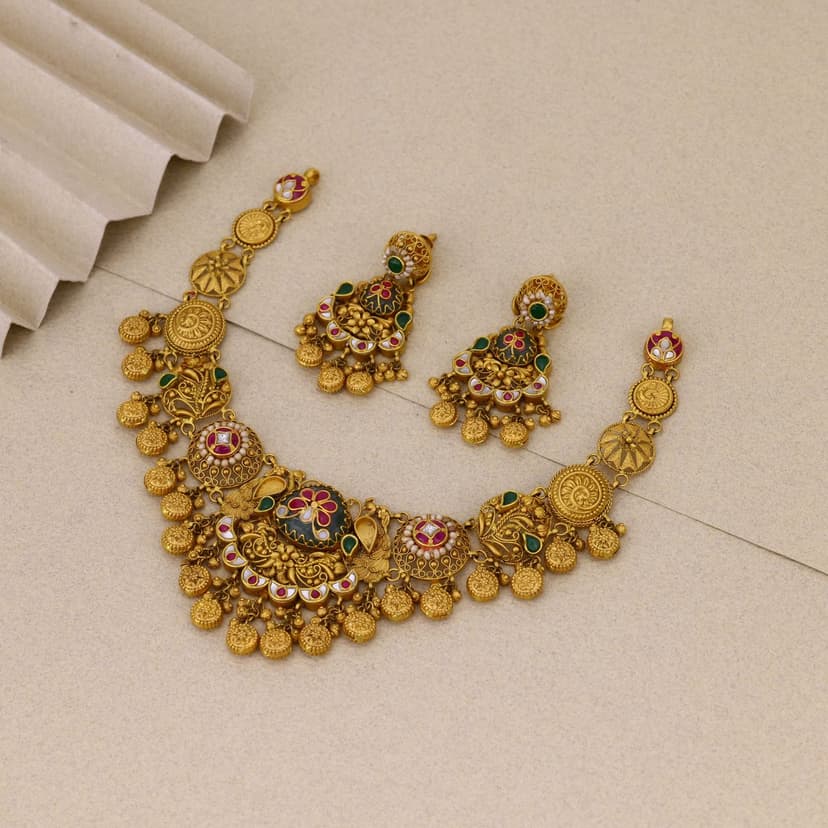
₹7,36,863
Ratnapushini Heritage Necklace 22KT
42.470 gm
22KT
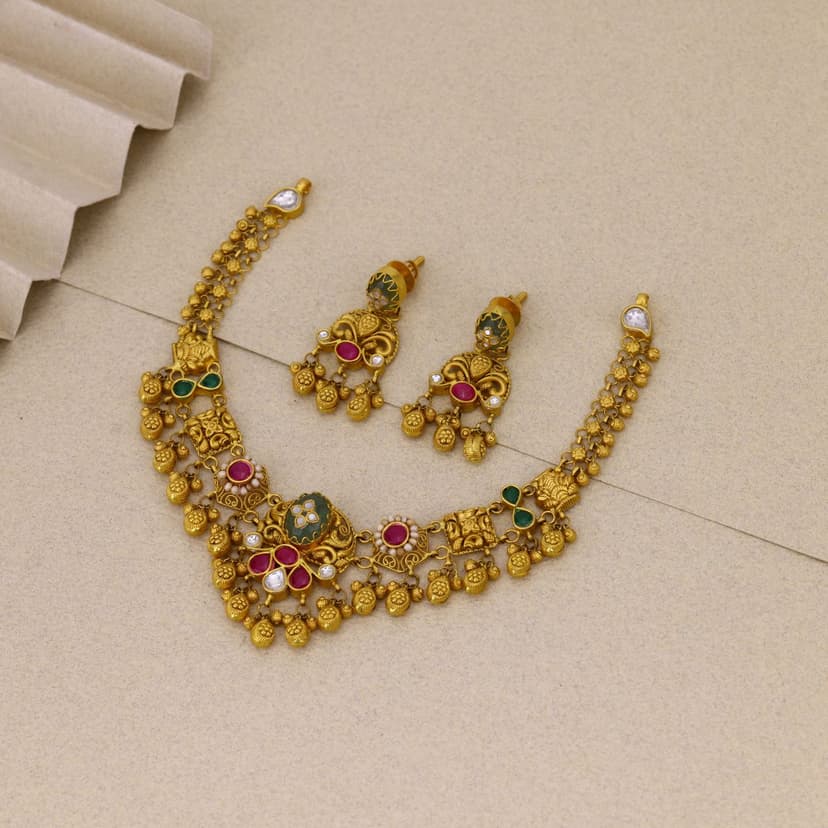
₹4,09,132
Haritkusari Heritage Necklace 22KT
23.980 gm
22KT
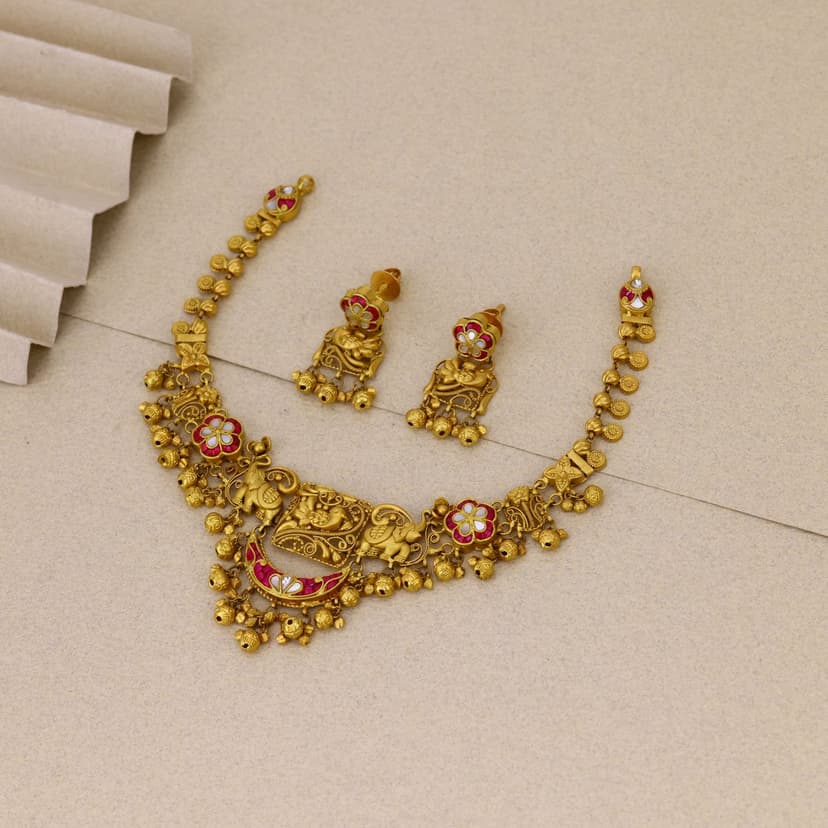
₹4,66,350
Gajamallari Heritage Necklace 22KT
26.210 gm
22KT
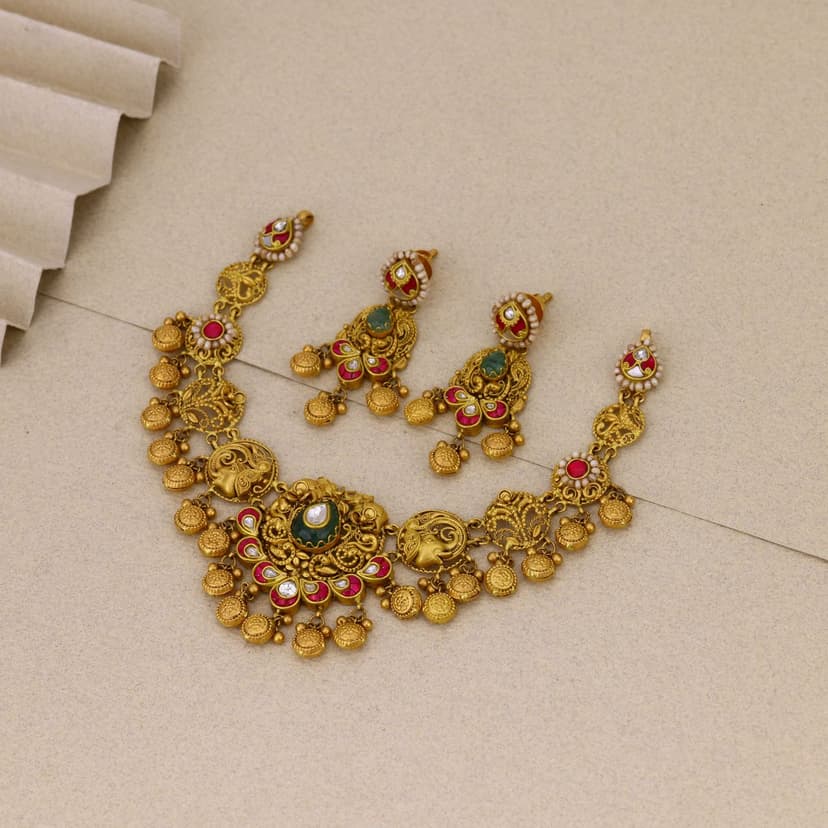
₹5,27,779
Haritdantika Heritage Necklace 22KT
30.390 gm
22KT
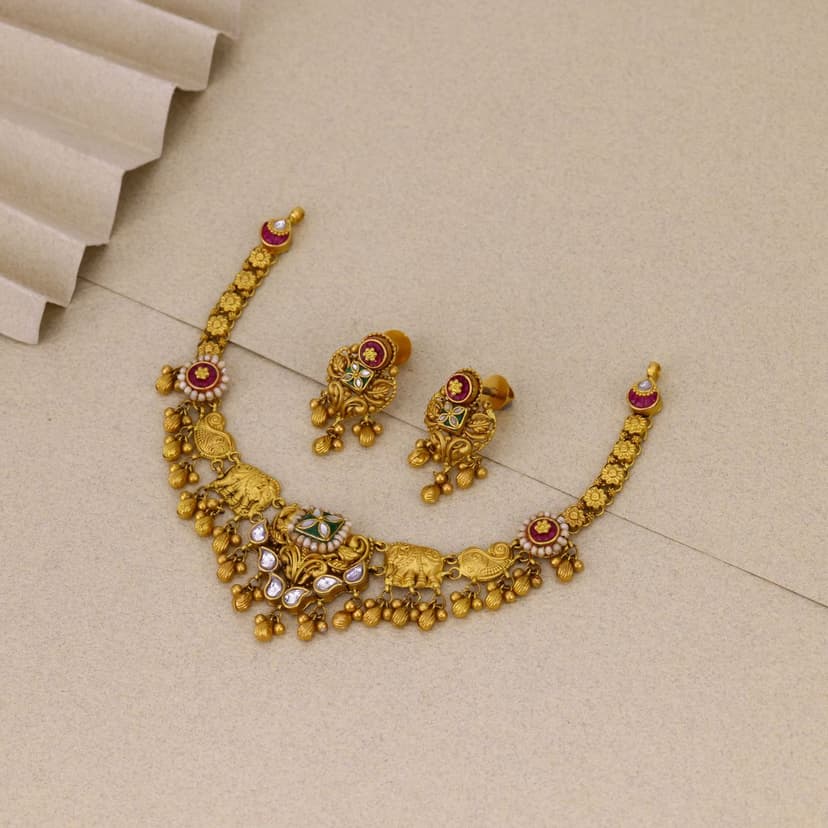
₹3,84,970
Gajamudrika Heritage Necklace 22KT
21.800 gm
22KT
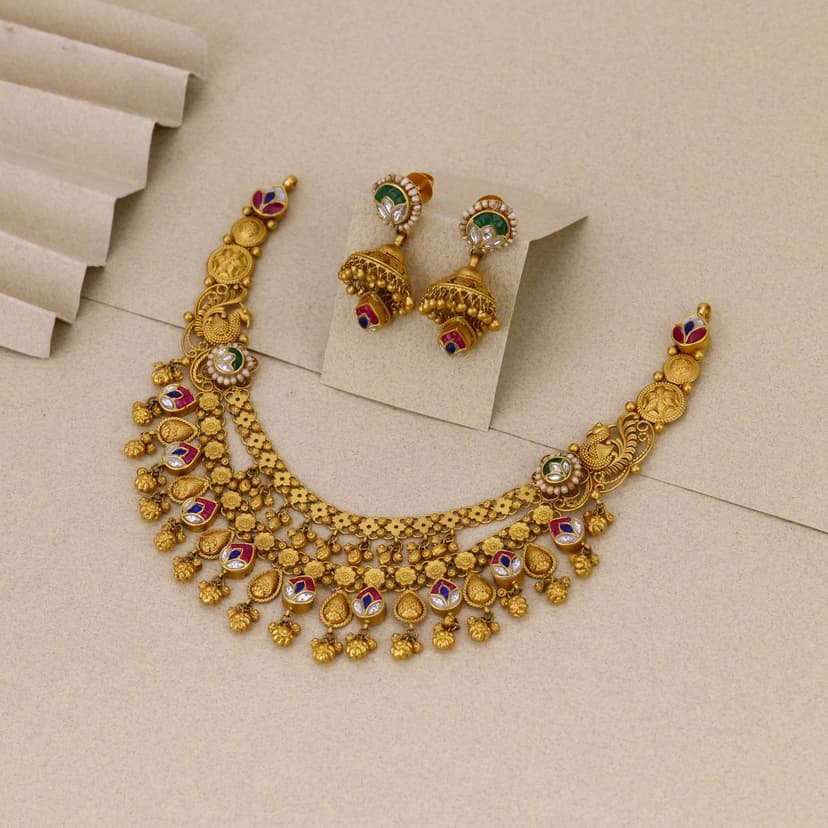
₹7,06,143
Ratnalasya Heritage Necklace 22KT
40.200 gm
22KT
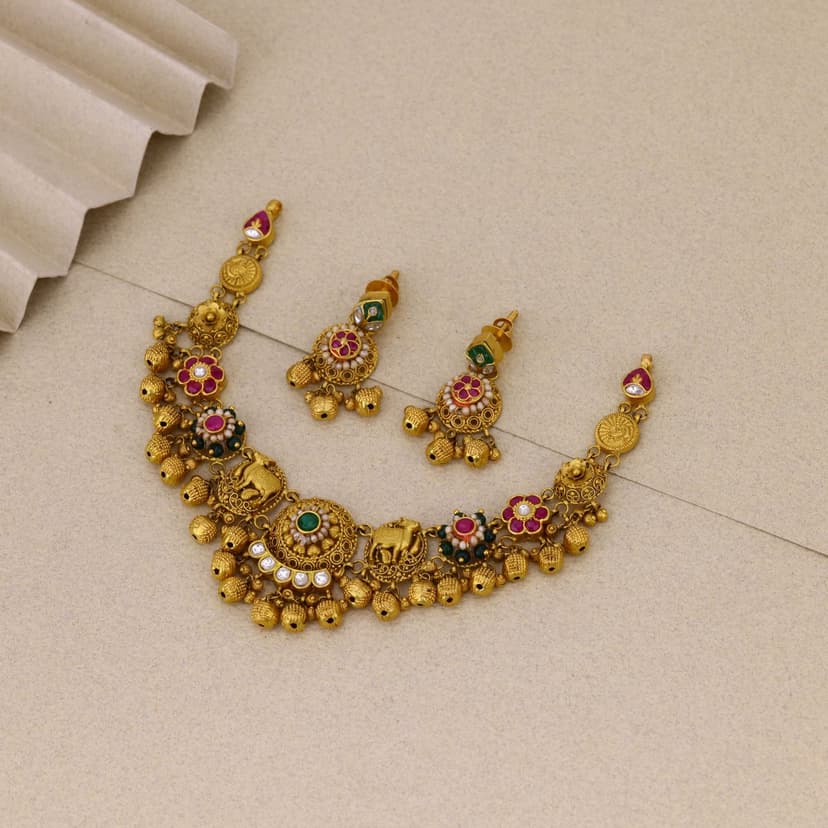
₹4,85,486
Gajapushali Heritage Necklace 22KT
28.260 gm
22KT
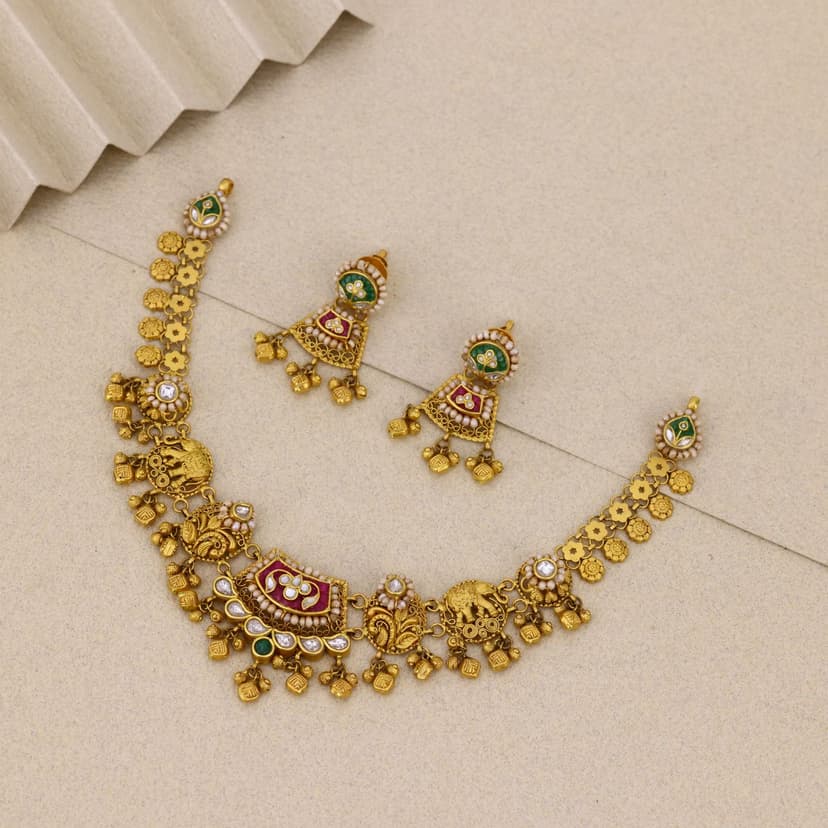
₹4,80,149
Gajakesara Heritage Necklace 22KT
26.980 gm
22KT
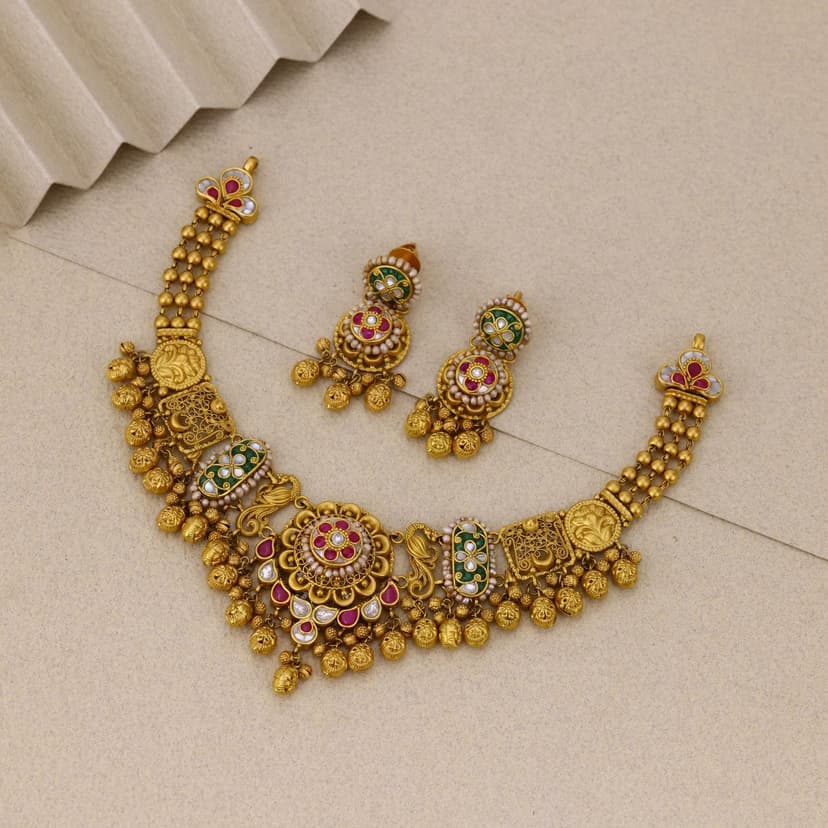
₹6,23,623
Hemakusari Heritage Necklace 22KT
35.430 gm
22KT
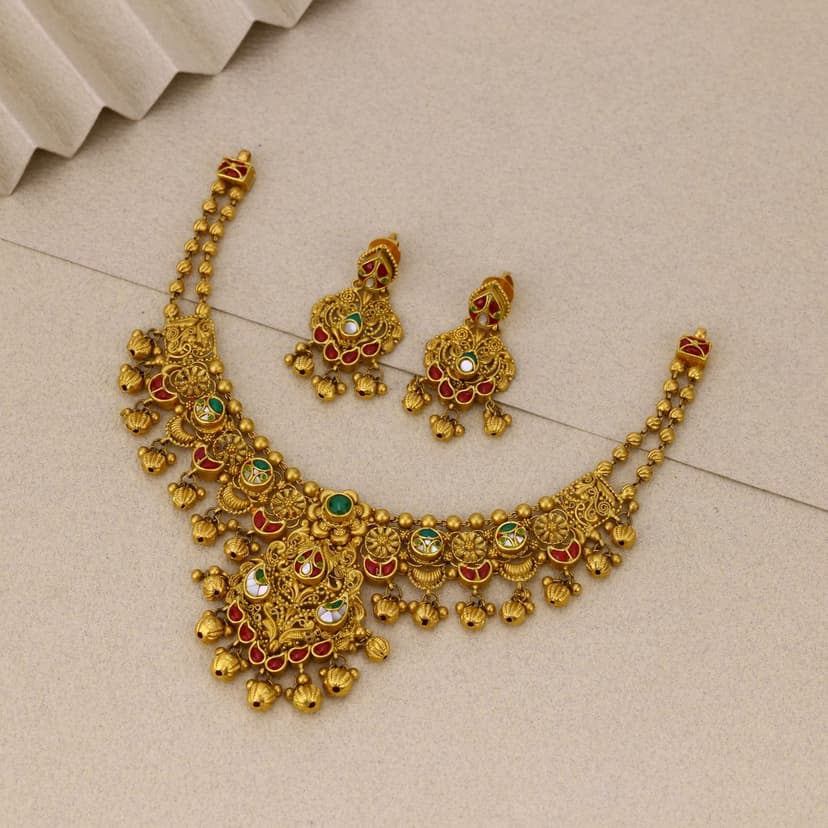
₹6,45,497
Ratnamohini Heritage Necklace 22KT
37.050 gm
22KT
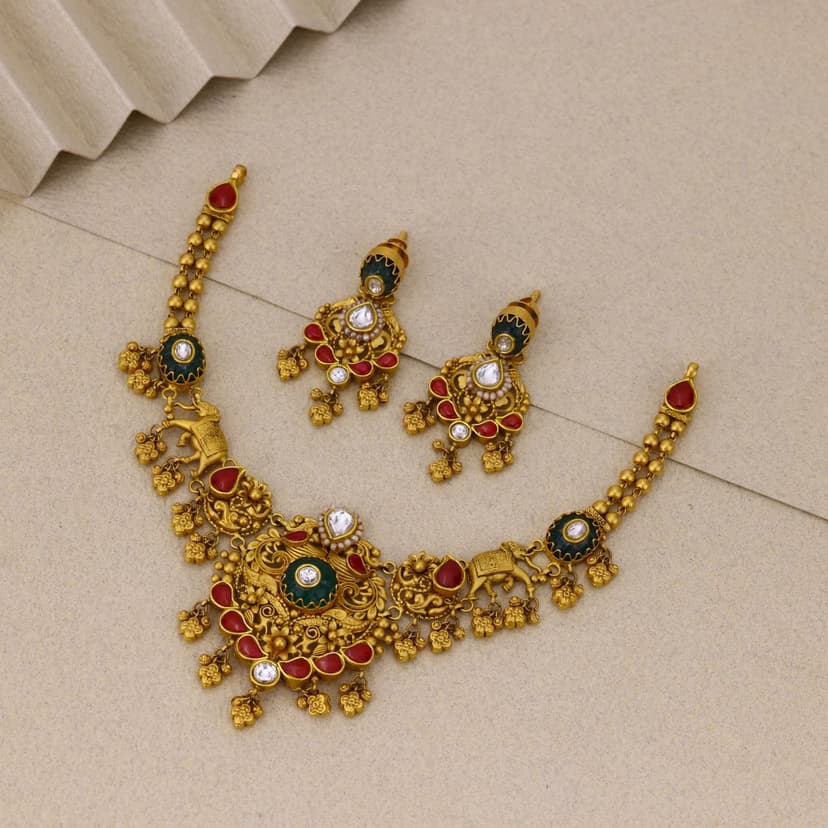
₹5,13,795
Gajakusuma Heritage Necklace 22KT
30.220 gm
22KT
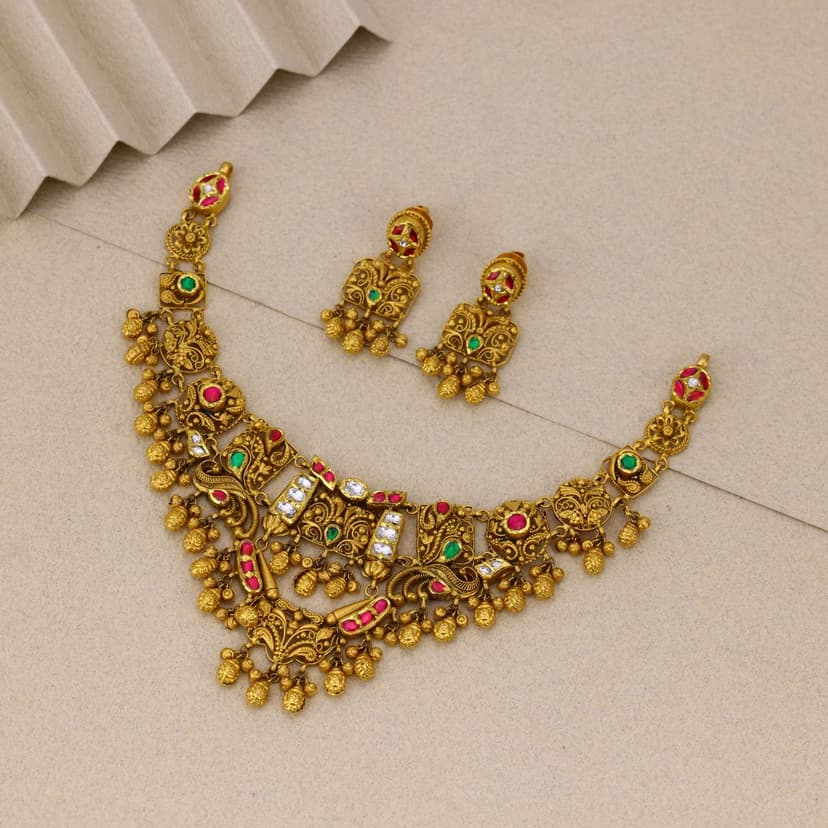
₹6,18,128
Ratnamalini Heritage Necklace 22KT
36.330 gm
22KT
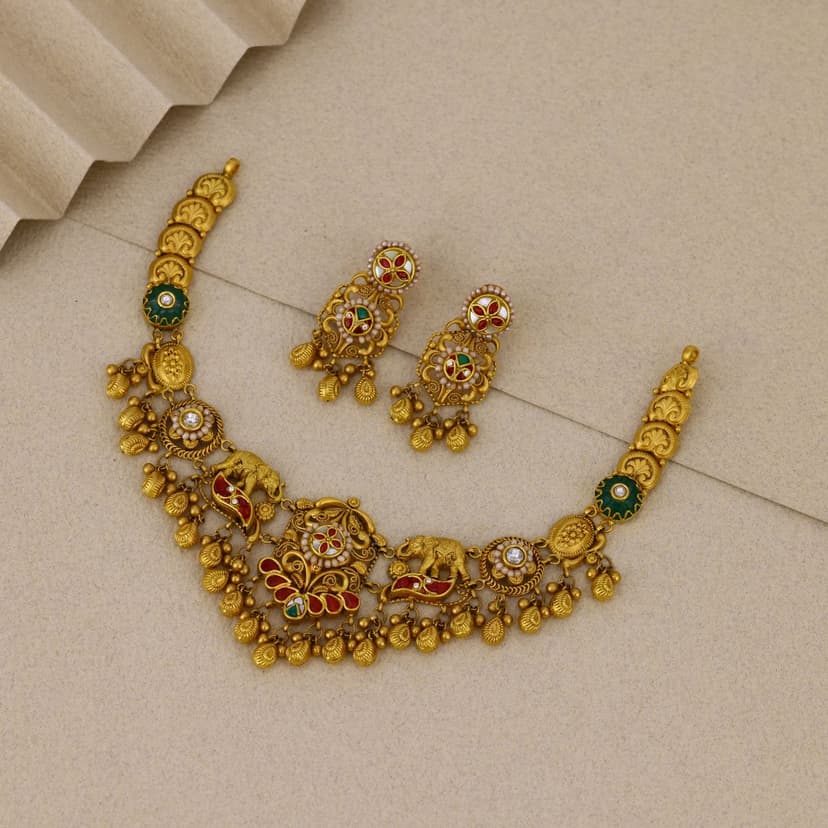
₹4,43,940
Gajapushpi Heritage Necklace 22KT
25.420 gm
22KT
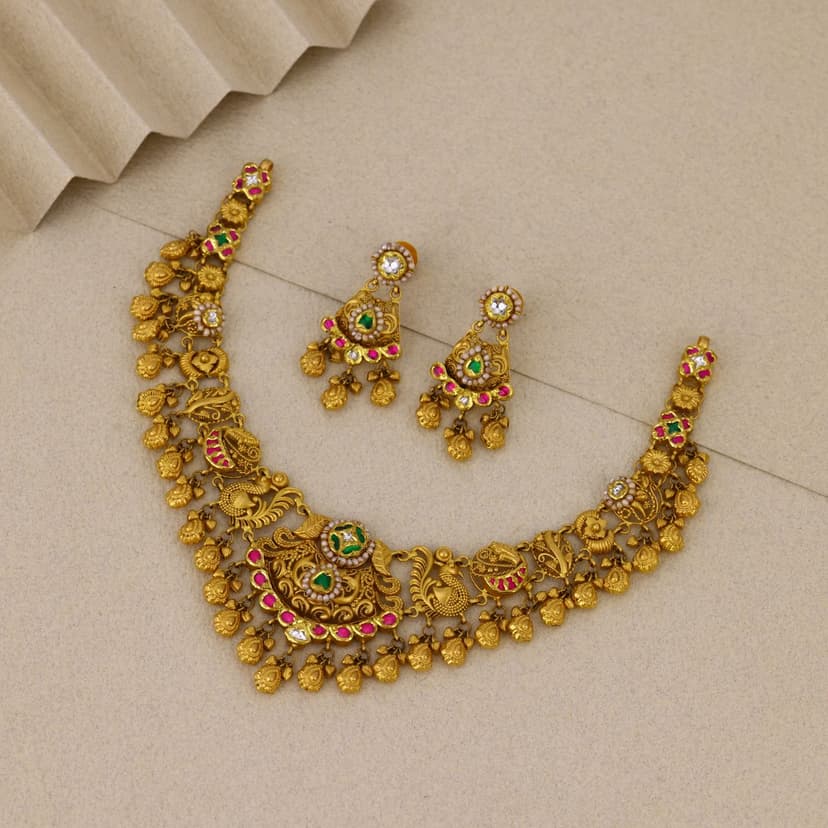
₹5,82,362
Hemamayuri Heritage Necklace 22KT
33.940 gm
22KT
India's jewellery tradition is not one tradition it is dozens of them, layered on top of each other across centuries and geographies. What a Gujarati bride wears on her wedding day looks nothing like what a bride from Tamil Nadu wears, which looks nothing like what comes out of Rajasthan's Kundan workshops. Each tradition has its own techniques, its own motifs, its own relationship between gold and the people wearing it. Understanding these differences is the beginning of buying traditional Indian jewellery well.
At Rushabh Jewels, we carry traditional Indian jewellery across the major craft traditions antique gold, temple jewellery, Kundan, Meenakari, Polki and Gujarati heritage designs. Every piece is in 22KT BIS hallmarked gold. The craftsmanship is genuine. The pricing is transparent. And because we are based in Ahmedabad at the centre of one of India's most significant jewellery manufacturing regions our depth in Gujarati traditional jewellery specifically is something no national platform can match.
🏅
22KT BIS Hallmarked
916 certified every piece
🎨
Genuine Craftsmanship
Authentic traditional techniques
📍
Ahmedabad Expertise
Gujarati designs our speciality
🚚
Insured Delivery
Pan-India via Sequel & BVC
The words "traditional Indian jewellery" cover a range of techniques that are quite different from each other. Knowing what each one is how it is made, what it looks like and what occasions it suits makes the difference between buying the right piece and buying the wrong one.
Origin: Pan-India | Technique: Oxidised finish, hand engraving
Antique jewellery refers to pieces finished with an oxidised or matte texture that gives them the appearance of aged, heritage gold. The finish is achieved deliberately the gold is not actually old, but the surface treatment creates depth and character that polished gold does not have. Antique designs typically feature hand-engraved traditional motifs peacock, lotus, temple arch, floral borders and are often accented with Kundan or Polki stones. These are among the most versatile pieces in traditional Indian jewellery worn at weddings, festivals and functions with equal ease.
Origin: South India Tamil Nadu | Technique: Repousse gold work, deity motifs
Temple jewellery originated when artisans crafted ornaments for adorning temple deities in South India. The designs carry direct motifs from Hindu iconography goddess Lakshmi, peacocks, lotus flowers, divine figures, temple towers. Over centuries, these pieces moved from temple use to bridal and festive wear. Today, temple jewellery is worn across India for weddings, religious ceremonies and classical Bharatanatyam dance performances. Key pieces include Lakshmi haar, Kasu mala (coin necklace), temple earrings with deity faces, and Vanki (armlet). All in 22KT gold at Rushabh Jewels.
Origin: Rajasthan Jaipur | Technique: Gemstones set in pure gold foil
Kundan is one of the oldest and most distinctive forms of Indian gemstone jewellery. Precious and semi-precious stones rubies, emeralds, sapphires, turquoise are set in a framework of highly refined gold (Kundan). The stone sits in a formed gold cup and is held by Kundan pressed around its edges without any mechanical prong or bezel. The result is a flat-faced piece with a distinctive rich, jewel-like surface. Kundan jewellery is at its finest in Rajasthan particularly Jaipur though the craft is now practised across India. It is particularly associated with bridal jewellery and major festive occasions.
Origin: Rajasthan, Mughal influence | Technique: Uncut diamonds in gold
Polki uses uncut, unpolished natural diamonds the diamonds are set as they come from the earth, retaining their raw, irregular form. This gives Polki its characteristic earthy sparkle that is quite different from the brilliant flash of cut diamonds. Polki jewellery feels older, more heritage-connected it was the preferred jewellery of the Mughal courts and Rajasthani royalty. In 2025, Polki is one of the most searched bridal jewellery styles in India. Brides are pairing Polki chokers and chandbalis with both traditional lehengas and contemporary outfits. The rawness of uncut diamonds reads as a deliberate aesthetic choice rather than a compromise.
Origin: Persia, via Rajasthan Jaipur | Technique: Coloured enamel on gold
Meenakari is the art of fusing coloured enamel onto gold surfaces. Powdered enamel in specific colours is applied to the metal and fired at high temperatures the heat fuses it permanently to the gold. The craft arrived in India from Persia via Mughal artisans in the 16th century and was perfected by Jaipur's craftsmen into a distinctly Indian tradition. On gold jewellery, Meenakari creates vivid panels of colour deep reds, greens, blues and whites that contrast brilliantly with the warmth of 22KT gold. It is widely used in traditional necklaces, earrings, bangles and kadas, and is often combined with Kundan stone setting on the same piece.
Origin: South India & Gujarat | Technique: Gold coins strung as necklace
Coin jewellery features small gold coins either plain, embossed with deity faces (Lakshmi, Ganesh) or with traditional designs strung together as necklaces, pendants and earrings. The Kasu Mala (coin necklace) is a staple of South Indian and Gujarati bridal jewellery. Each coin is individually crafted in 22KT gold and the connecting links are also gold. The weight and sound of gold coins moving together is one of the most distinctive sensory experiences in Indian traditional jewellery. At Rushabh Jewels, our coin necklace collection includes Lakshmi coin designs popular across traditions and Gujarati-specific coin patterns.
Origin: Odisha Cuttack | Technique: Twisted wire gold work
Filigree is the art of twisting and bending extremely fine threads of gold into intricate lace-like patterns. The craft requires exceptional precision no casting, no moulding, just the direct manipulation of gold wire into shapes that would be impossible with any other technique. Odisha's Cuttack is the most celebrated centre of Indian gold filigree, where craftsmen have passed the skill down through generations. Filigree pieces are lighter than they appear and have a delicate, intricate quality that is unlike any other jewellery technique. Available in limited designs at Rushabh Jewels pieces crafted by specialists.
Origin: Rajasthan & Gujarat | Technique: Uncut gems embedded in molten gold
Jadau is a technique where precious and semi-precious stones are embedded directly into molten gold rather than set mechanically. The gold is heated until soft, the stones are pressed in, and as the gold cools it holds the stones permanently. The result is an exceptionally secure setting where the stone and gold feel completely integrated. Jadau jewellery is heavy, elaborate and distinctly associated with bridal wear and major ceremonial occasions. The technique is practised primarily in Rajasthan and Gujarat where the craft has been part of royal jewellery traditions for centuries.
Gujarat has one of India's most distinctive regional jewellery traditions shaped by the state's trade history, cultural practices and the central role of gold in Gujarati family life. Ahmedabad and Surat are at the heart of India's gold jewellery manufacturing industry. Being based in Ahmedabad gives Rushabh Jewels a specific depth in Gujarati jewellery that national platforms cannot offer.
Key pieces of authentic Gujarati traditional jewellery what they are, and what occasions they belong to:
Vagda Mangalsutra
Cylindrical gold pendant on multi-strand black bead chain the signature Gujarati mangalsutra. Available in custom dimensions at Rushabh Jewels.
Coin Haar
Multi-strand necklace of embossed gold coins traditionally worn by Gujarati brides and at major festive occasions. Lakshmi and Ganesh coin designs.
Borla
The Gujarati bridal forehead piece a pendant hanging from the Maang tikka that rests on the forehead. A central element of the traditional Gujarati bridal look.
Nath (Nose Ring)
Large gold nose ring worn by Gujarati brides elaborately designed with pearls, Kundan or meenakari work. Specifically sized and designed for the Gujarati bridal tradition.
Antique Kangan
Heavy antique-finish gold bangles with meenakari or Kundan accents central to Gujarati wedding trousseau. Available as individual pieces or paired sets.
Passa / Jhumar
Side-head jewellery that clips to the hair above one ear and cascades downward a distinctive Gujarati and Rajasthani bridal accessory not commonly found outside these traditions.
If you are looking for authentic Gujarati traditional jewellery from a team that understands the craft, the occasion and the cultural significance this is the right place. Contact us on +91 81601 18179 or book a consultation at our Ellisbridge, Ahmedabad showroom.
Indian traditional jewellery covers the entire body from the maang tikka on the forehead to the payal on the ankles. Here is a complete reference for every piece in the traditional bridal and festive jewellery wardrobe:
| Body Position | Jewellery Piece | Common Styles / Traditions |
|---|---|---|
| Head / Hair | Maang Tikka, Passa / Jhumar, Matha Patti | Maang tikka universal across traditions. Passa specific to Gujarat & Rajasthan. Matha Patti across North & West India. |
| Forehead | Borla (Gujarati), Tikka | Borla specifically Gujarati pendant hanging on the forehead from the Maang tikka. Tikka style varies by region. |
| Nose | Nath, Laung, Nathni | Large Nath for Gujarati and North Indian brides. Smaller Laung for daily wear. Nathni for South Indian traditions. |
| Ears | Jhumka, Chandbali, Jhoop, Stud | Jhumka universal across India. Chandbali Mughal-influenced. Jhoop for North Indian festive wear. Regional variations across all traditions. |
| Neck | Haar, Rani Haar, Choker, Mangalsutra, Kasu Mala | Mangalsutra married women. Kasu Mala Gujarati & South Indian. Rani Haar North & West India weddings. |
| Upper Arm | Bajuband, Vanki | Bajuband across North India. Vanki specifically South Indian V-shaped armlet. Often associated with classical dance. |
| Wrists | Kangan, Churi, Kada, Pola, Chooda | Kangan and Kada across India. Pola for Bengali brides (white shell). Chooda for Punjabi brides (red & white bangles). |
| Waist | Kamarbandh, Oddiyanam | Kamarbandh for North Indian brides gold waist chain. Oddiyanam for South Indian brides heavier waist belt with motifs. |
| Fingers | Rings, Haath Phool, Arsi | Haath Phool hand harness connecting wrist to fingers. Arsi thumb ring with mirror, Rajasthani tradition. |
| Ankles | Payal, Anklet | Payal in silver traditionally (considered respectful to wear silver on feet rather than gold). Some communities wear gold anklets. |
| Toes | Bichiya, Toe Rings | Silver toe rings worn by married Hindu women across traditions most commonly both second toes. |
Traditional Indian jewellery is not a single style it is dozens of regional traditions, each with its own techniques, motifs and cultural significance. Here is a guide to the major regional traditions and what makes each distinct:
| Region | Defining Style | Key Pieces | What Makes It Distinct |
|---|---|---|---|
| Gujarat ⭐ | Antique gold, Meenakari, Coin Jewellery | Vagda Mangalsutra, Coin Haar, Borla, Nath, Antique Kangan, Passa | Cylindrical pendants, multi-strand coin necklaces, heavy kangan with meenakari distinctive from all other Indian traditions. Rushabh Jewels specialises in this. |
| Rajasthan | Kundan, Polki, Meenakari | Kundan necklace sets, Polki chokers, Borla, Aad necklace, Meenakari bangles | Vibrant enamel colours, precious stone setting techniques developed under Mughal influence the most internationally recognised Indian jewellery tradition. |
| South India (Tamil Nadu) | Temple Jewellery, Kasu Mala | Lakshmi Haar, Kasu Mala, Vanki, Nethichutti, Temple Earrings | Deity motifs, heavy repousse gold work, coins jewellery with strong connection to temple worship and classical dance traditions. |
| Punjab | Heavy gold, Chooda | Chooda (bridal bangles), Polki necklace, Passa, Gold Jhumka | Maximum gold presence, heavy weight, elaborate setting Punjabi bridal jewellery is among the most elaborate in India by sheer volume of gold. |
| Maharashtra | Kolhapuri Saaj, Nath | Kolhapuri Saaj necklace, Vati Mangalsutra, Nath, Mohan Mala | Black and gold combination in the Vati mangalsutra, the distinctive large Maharashtrian Nath, and the Kolhapuri Saaj a layered necklace unique to this tradition. |
| West Bengal | Gold with white shell (Pola) | Pola (shell bangles), Gold Noa, Loha, Shakha | The Pola white conch shell bangles is worn exclusively by married Bengali women. The combination of gold Noa and white Pola is a signature of Bengali bridal tradition. |
| Odisha | Filigree (Tarakasi) | Filigree necklaces, earrings, bangles all in twisted gold wire | Cuttack's filigree craft is among the most technically demanding in Indian jewellery fine gold wire twisted into lace-like structures with no casting or moulding. |
| Occasion | Recommended Traditional Pieces | Style Note |
|---|---|---|
| Wedding Day | Full regional bridal set necklace, earrings, maang tikka, bangles, mangalsutra, rings | This is the one day for maximum traditional jewellery. The weight and elaborateness appropriate here would be too much for any other occasion. |
| Sangeet / Mehendi | Antique gold earrings, medium weight necklace or pendant set, light bangles | Festive but not bridal weight. Antique designs photograph beautifully at indoor evening events. |
| Religious Ceremonies / Pooja | Temple jewellery, coin necklace, traditional gold earrings | Temple motifs and gold coin pieces carry specific auspicious significance for religious occasions. |
| Festive Occasions (Navratri, Diwali) | Meenakari earrings, antique choker, Kundan pendant set | Colour works well at festivals Meenakari and Kundan pieces add vibrancy appropriate for festive dressing. |
| Family Functions | Medium-weight antique necklace, gold jhumkas, traditional bangles | Traditional without being bridal. A classic antique necklace set is the most practical investment for recurring function wear. |
| Classical Dance Performances | Temple jewellery Vanki, Necklace, Nethichutti, Armlet | Temple jewellery was created for this context it photographs well under stage lighting and carries the correct cultural connection for classical Indian dance. |
Contemporary jewellery follows trends. A piece that is fashionable today may look dated in five years. Traditional Indian jewellery operates on a completely different timescale the designs that defined Gujarati weddings a century ago define them today. The Kundan techniques perfected in 16th-century Jaipur are still the benchmark. Temple jewellery motifs have not changed in their essential character across five hundred years of continuous production.
This timelessness has a practical dimension as well. A traditional antique gold necklace bought for a wedding in 2025 can be worn to a family function in 2040, gifted to a daughter in 2055, and worn at her wedding in 2060 each time looking completely appropriate, never dated. Contemporary designs cannot make that claim. The investment case for traditional jewellery is not just in the gold weight it is in the design's ability to remain meaningful across generations.
At Rushabh Jewels, every traditional jewellery piece is BIS hallmarked 22KT gold which means the gold value is independently verified and accepted at current market rates anywhere in India. The design's timelessness and the gold's certified purity together make traditional jewellery the most complete form of wearable value in Indian households.
What is traditional Indian jewellery?
Traditional Indian jewellery refers to pieces crafted using techniques and designs developed over centuries across India's regions antique gold, temple jewellery with deity motifs, Kundan work with gemstones in gold foil, Polki with uncut diamonds, Meenakari with enamel, and regional styles like Gujarati coin necklaces and South Indian temple sets. Each tradition has its own craft techniques, cultural significance and regional identity.
What is Kundan jewellery and how is it different from Polki?
Kundan sets gemstones in a framework of refined gold foil creating flat-faced, richly coloured pieces. The stones are pressed into gold cups and held by Kundan (refined gold) rather than mechanical prongs. Polki uses uncut, unpolished natural diamonds raw and irregular, with an earthy heritage sparkle. Kundan is more colourful and vibrant; Polki feels more antique and understated. Both originate from Rajasthan and are associated with Mughal-era craftsmanship.
What is Gujarati traditional jewellery?
Gujarati traditional jewellery includes the Vagda mangalsutra (cylindrical gold pendant), coin necklaces (Kasu mala), the Borla (forehead piece), Nath (bridal nose ring), heavy antique kangan, and Passa (side-head jewellery). Rushabh Jewels based in Ahmedabad has deep expertise in authentic Gujarati jewellery including custom vagda dimensions, coin haar designs and traditional Gujarati bridal sets.
What is Meenakari jewellery?
Meenakari is the art of fusing coloured enamel onto gold surfaces deep reds, greens, blues and whites fired onto the metal surface permanently. Originated in Persia, perfected in Jaipur. Creates vivid colour panels on gold jewellery that contrast beautifully with 22KT gold's warmth. Widely used in necklaces, earrings, bangles and kadas, often combined with Kundan stone setting on the same piece.