
.jpg.jpeg&w=3840&q=75)
Most mangalsutra guides right now are just design catalogues, scroll through fifty photos, pick whatever looks nice. That's fine if you're browsing for inspiration, but it skips the part that actually matters once you own the thing: will it survive being worn every single day for the next twenty years without snagging on your dupatta, bending out of shape, or ending up in a drawer because it's too heavy to wear to work.
This one's less about which design looks trendiest and more about what actually holds up.
Why "Daily Wear" Has Become Its Own Category
For a long time, a mangalsutra was one piece, usually heavy, usually ornate, worn on big occasions and mostly kept safe the rest of the time. What's changed is that a lot of married women now want to wear it every day, under office wear, with jeans, without thinking about it, the same way a wedding ring works in a lot of other cultures.
That shift has created real demand for lighter, simpler versions built specifically to be worn constantly rather than displayed occasionally. It's not that the traditional heavy set has gone out of fashion, it just isn't practical for someone sitting at a desk eight hours a day or catching a rickshaw home in the evening.
What Weight Actually Means for Daily Wear
This is the number that matters more than almost anything else if you're looking to Buy Gold Mangalsutra online for everyday use. A daily-wear mangalsutra, chain and pendant together, ideally sits under 15 grams. Anything heavier starts to feel noticeable by the end of a full day, and noticeable usually means it comes off and stays off.
Lighter weight isn't a compromise on symbolism either. The black beads and the pendant carry the meaning, not the grammage. A well-designed 8 to 10 gram piece does the job just as completely as a 40 gram heirloom set, it's simply built for a different kind of wear.
Pendant Styles Worth Actually Considering
A single small diamond or a plain gold solitaire on a slim chain remains one of the most practical daily-wear formats, mainly because there's nothing to catch, nothing that dangles, and it sits flat against the collarbone without shifting around.
Geometric bar and circle pendants have grown a lot too, and they tend to age well design-wise, a simple bar pendant doesn't date the way a very ornate one eventually can.
Vati and traditional motifs haven't disappeared, they've just gotten lighter. The same recognisable shapes that regional styles have used for generations are now being made in a fraction of the original weight, which means you can keep the traditional look without the traditional heft.
Chain Type Matters More Than People Realise
The chain gets far less attention than the pendant, but it's actually the part doing all the daily work. A box or rope chain construction tends to hold up better under constant wear than something delicate and flat, since it's less prone to kinking or catching on fabric.
If black beads are strung directly onto the chain rather than fixed in a separate settled segment, check how securely they're anchored. Loose stringing is one of the more common reasons people end up back at the jeweller within the first year, not because the gold failed, but because the beads worked loose from daily movement.
Two-Tone and Rose Gold: Worth It or Just a Trend?
Mixing rose gold or white gold with the traditional yellow has become genuinely popular this year, not just a passing look. Rose gold especially tends to sit well against most skin tones and pairs easily with both ethnic and western clothing, which matters a lot for something you're wearing every single day across very different outfits.
If you're unsure, yellow gold remains the safer long-term choice simply because it never looks dated and matches everything else gold you already own. Two-tone is worth considering specifically if you want the piece to feel a bit more contemporary against office wear.
Hallmark and Purity Checks Apply Here Too
A lot of buyers treat mangalsutra shopping as less formal than buying a full set, and skip the usual verification steps as a result. Don't. Check for the BIS hallmark and the 6-digit HUID on the chain itself, and verify it through the BIS CARE app the same way you would for any other gold purchase.
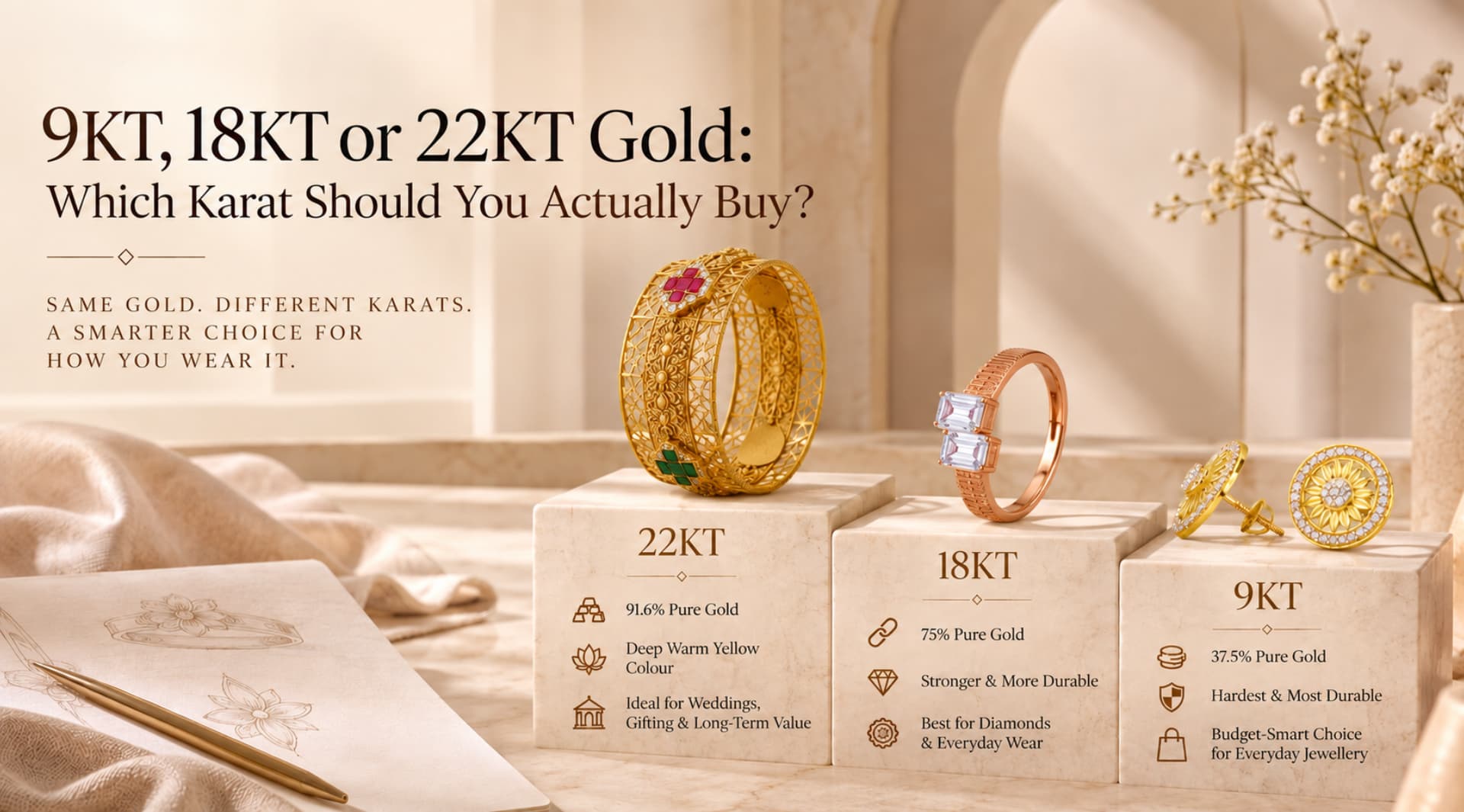
Also worth asking directly: 18K or 22K. Daily-wear pieces are increasingly made in 18K since it's more durable for constant wear than softer 22K gold, but 22K remains the standard for anyone who wants it to match a heavier bridal set. Neither is wrong, it depends entirely on how the piece will actually be worn.
Basic Care for Something You Never Take Off
Take it off before bathing, swimming, or applying perfume, moisture and chemical exposure are the biggest reasons daily-wear pieces dull faster than expected. If the chain is delicate or flat-link, avoid sleeping in it regularly since constant movement against bedding is what causes most kinking.
Get the clasp checked every so often, particularly on pieces worn continuously for years. A clasp that's slightly worn is easy to miss until the day it actually fails.
Finding the Right One
Our mangalsutra collection is built around exactly this daily-wear thinking, lightweight chains under 15 grams, secure bead settings, and both 18K and 22K options depending on how you plan to wear it, all BIS hallmarked with the HUID visible on the piece. If you'd rather feel the weight and chain construction in person before deciding, our store keeps a range across both traditional and daily-wear styles for exactly this kind of comparison.
The Short Version
Weight matters more than almost any other decision here, aim under 15 grams if this is genuinely going to be worn every day. Check how securely the beads are set, not just how the pendant looks. Decide between 18K and 22K based on actual wear pattern, not habit. And treat the hallmark check as non-negotiable, regardless of how simple or small the piece feels compared to a full set.
.jpg.jpeg&w=3840&q=75)