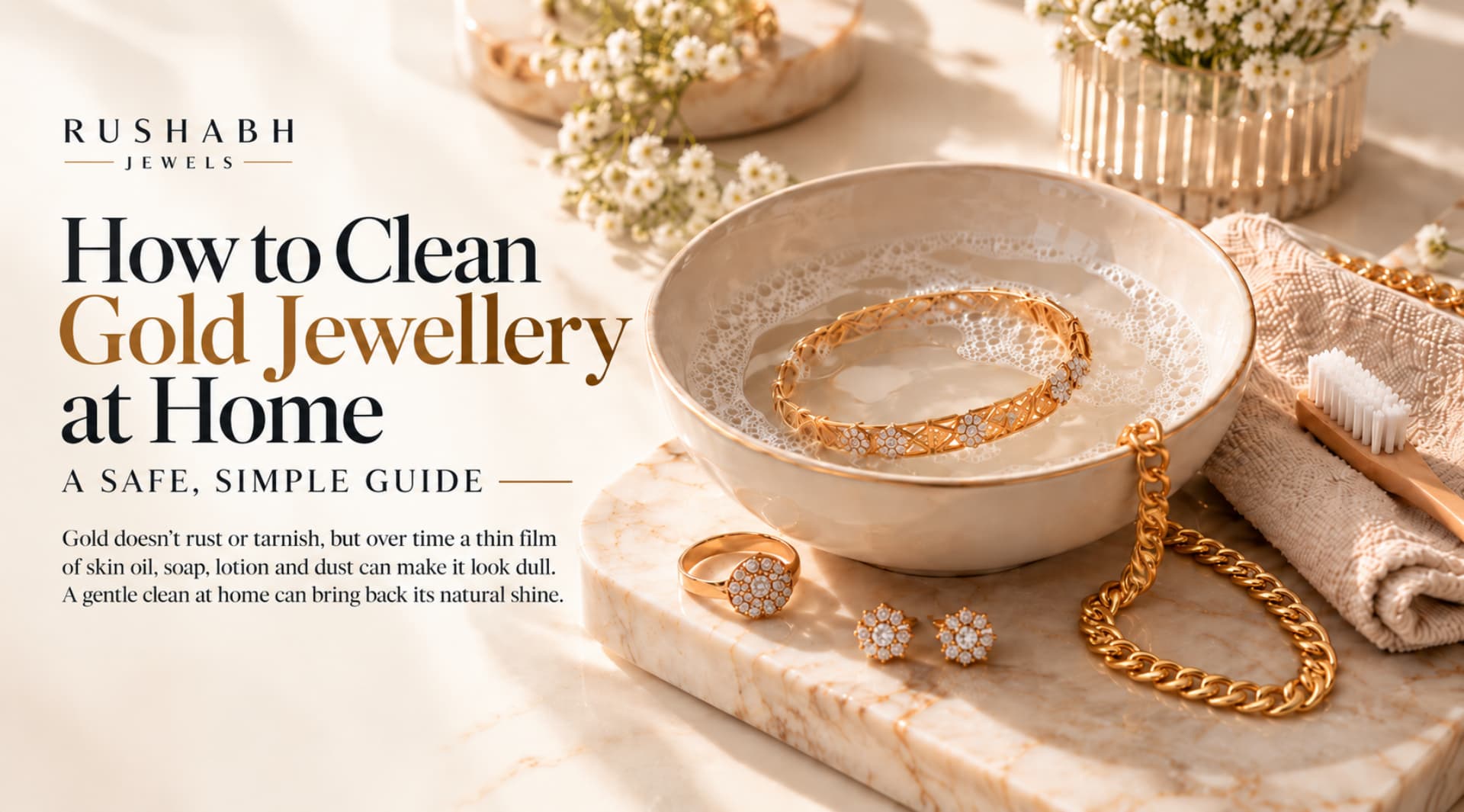
Gold doesn’t rust, and pure gold doesn’t tarnish the way silver does. However, gold alloys can sometimes discolour. So why does that favourite chain look dull after a few months? Usually it’s not the gold at all. It’s a thin film of skin oil, soap, lotion and dust that settles on the surface and softens the shine. The good news is that this kind of dullness is easy to fix at home, and you don’t need anything fancy.
What you need
Nothing you don’t already have. A bowl of warm water, a few drops of mild dish soap, a soft toothbrush (a baby one is ideal), and a clean, lint-free cloth.
The basic method
- Fill the bowl with warm water, not hot, and add a few drops of mild soap.
- Let the jewellery soak for 15 to 20 minutes. This loosens the film so you don’t have to scrub hard.
- Brush gently with the soft toothbrush. Pay attention to the spots where grime hides: under the clasp, between chain links, around settings.
- Rinse the jewellery in a separate bowl of clean, lukewarm water. This helps prevent small pieces from accidentally disappearing down the drain.
- Pat dry with the soft cloth and let it air dry fully before you put it away.
That’s it. Most pieces come back brighter after one round.
What to keep away from gold
Chlorine and bleach
Pool water, household cleaners and bleach can damage the alloy in gold jewellery and, over time, weaken it. Take your jewellery off before swimming or cleaning the house.
Harsh chemicals and abrasive cleaners
Skip toothpaste, scouring powders and rough cloths. They can leave fine scratches that dull the surface.
Rough scrubbing
More pressure doesn’t mean more shine. A soft brush and patience work better than force.
If your piece has stones
This is where a little care matters.
Diamonds and many untreated, securely set hard stones handle mild soap and water well. However, certain gemstone treatments and settings require special care. Pearls, opals, coral and some other soft or porous stones should not be soaked or brushed. Wipe them gently with a barely damp, soft cloth instead.
Stones set with glue or filler can loosen if they sit in water. If you’re not sure how a piece is made, ask the jeweller before cleaning.
Antique, kundan, polki and meenakari pieces
Traditional pieces often have lac fillings, enamel work or stones set in a way that doesn’t tolerate soaking. Don’t put these in water. Gently wipe accessible surfaces with a soft, dry, lint-free cloth, avoiding delicate enamel, painted details and loose settings. For a deeper clean, take them to a jeweller who works with that kind of craftsmanship.
About ultrasonic cleaners
You may see small ultrasonic cleaning machines sold online. They can work well on plain gold and some stones, but they can also loosen stones that were already slightly weak, and they are not suitable for pearls or fragile pieces. If you’re unsure, leave this to a jeweller.
Everyday habits that keep gold looking new
Put jewellery on last. Perfume, hairspray and lotion first, jewellery after. Those products leave exactly the film we started with.
Take it off before you cook, exercise, shower, swim or sleep. Sweat, oils and knocks are the main reasons gold loses its shine and shape.
Store pieces separately. Gold is soft enough that pieces rub against each other and scratch. Use a soft pouch or a compartment for each, and keep chains fastened so they don’t tangle.
Wipe after wearing. A quick pass with a soft cloth takes ten seconds and stops the film from building up.
How often should you clean?
For pieces you wear daily, a gentle clean about once a month is usually enough, depending on the piece. For occasional pieces, clean once or twice a year, or before you wear them for a special occasion.
When to see a jeweller instead
A professional check is worth it once a year for jewellery you wear often. A jeweller can polish out light scratches, tighten loose prongs and check clasps—tasks that are hard to do at home. Go sooner if a stone feels loose, a clasp doesn’t close properly, or a chain link looks stretched.
A quick note on gold-plated and gold-filled jewellery
The soaking and brushing method above is intended for suitable solid gold jewellery. Gold-plated pieces have a thin gold coating that can wear away with scrubbing. Gold-filled jewellery has a thicker, bonded layer of gold, but it also benefits from gentle care. For both types, use a soft, slightly damp cloth and avoid abrasive cleaning.
If you’d like to see how well-made, hallmarked jewellery should look and feel, browse our gold necklaces, gold bangles or gold kada. You can also book an appointment and bring in a piece you’d like checked.